Arthrosamid® Injectable Hydrogel Treatment
Arthrosamid® is an injectable treatment used to help manage the symptoms of knee osteoarthritis (OA).
It is a non-absorbable, biocompatible hydrogel consisting of approximately 97.5% sterile water and 2.5% cross-linked polyacrylamide.
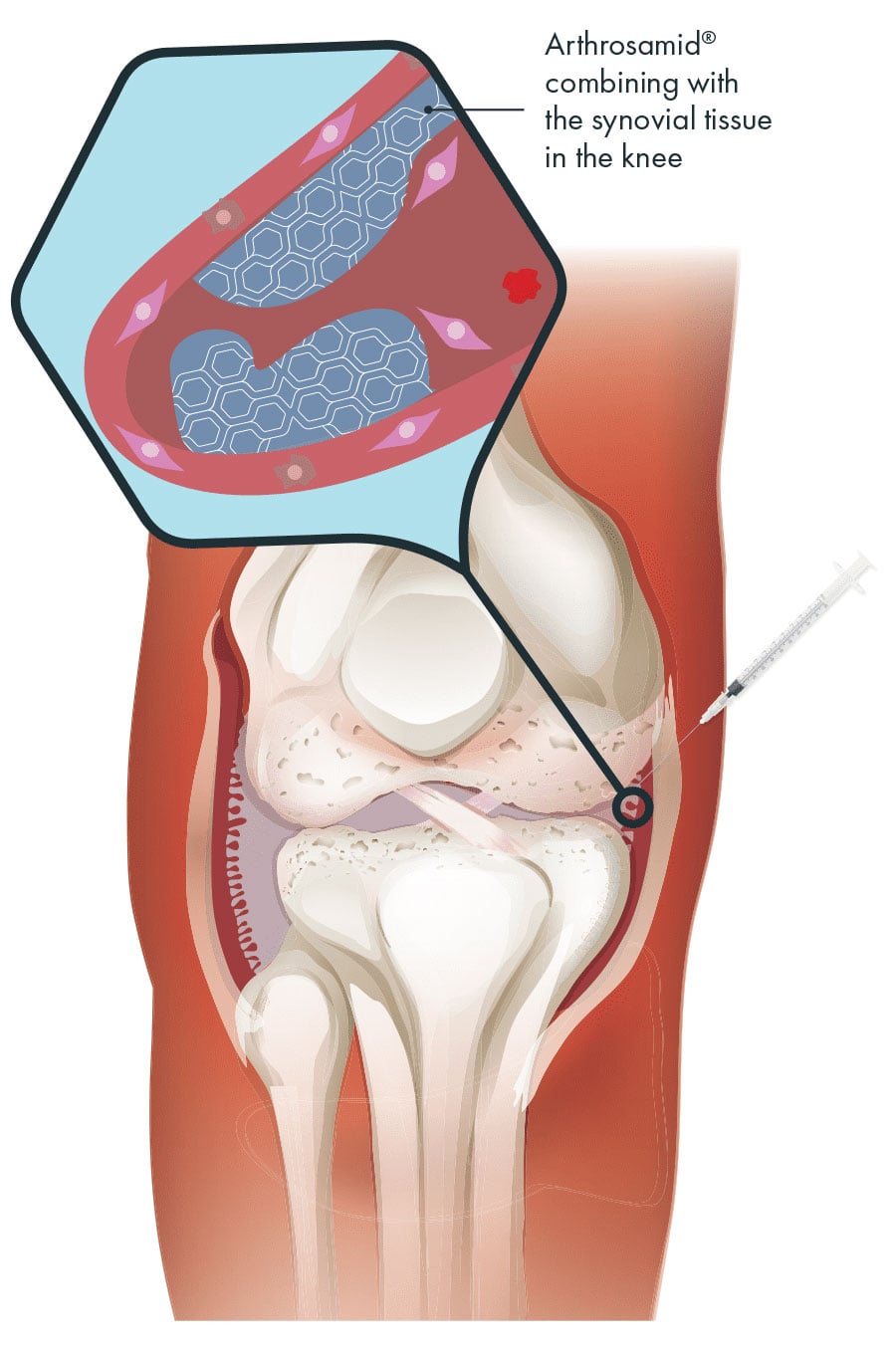
Unlike corticosteroid or hyaluronic acid injections, Arthrosamid® is not absorbed by the body. Following injection, it becomes integrated into the synovial tissue lining the knee joint and is intended to remain there permanently.
It is important to understand that Arthrosamid® does not cure osteoarthritis and does not replace damaged cartilage. The aim of treatment is to reduce pain and improve function and quality of life.
Conditions That Arthrosamid® Suits?
You may be considered for Arthrosamid® if you have symptomatic knee osteoarthritis causing problems such as:
Pain during walking or weight-bearing
Reduced ability to exercise
Difficulty with stairs or everyday activities
Symptoms that have not responded adequately to exercise, physiotherapy, weight management, medication or other conservative treatments
Treatment suitability will be determined following an individual clinical assessment.
Frequently Asked Questions
Arthrosamid® is injected directly into the knee joint.
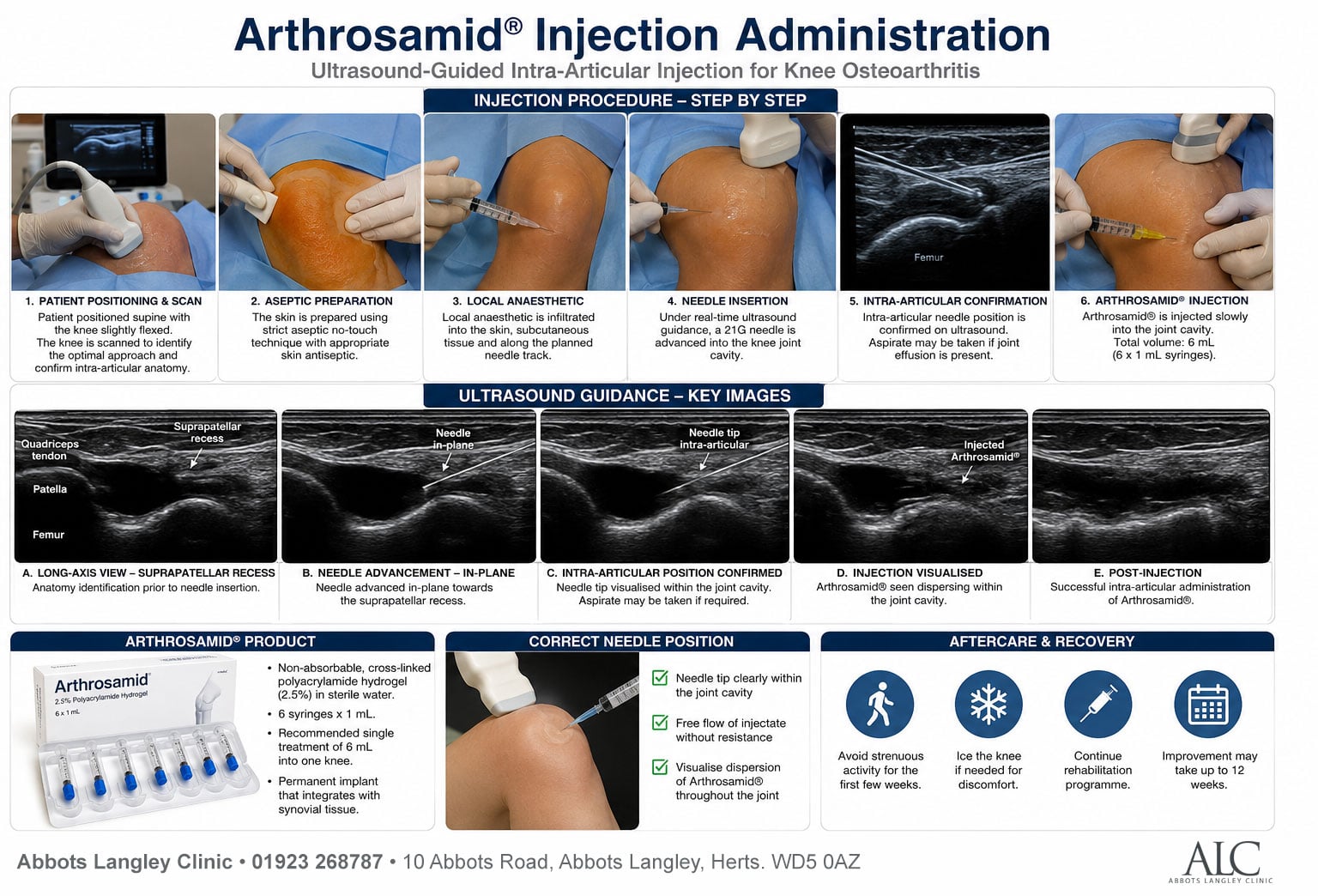
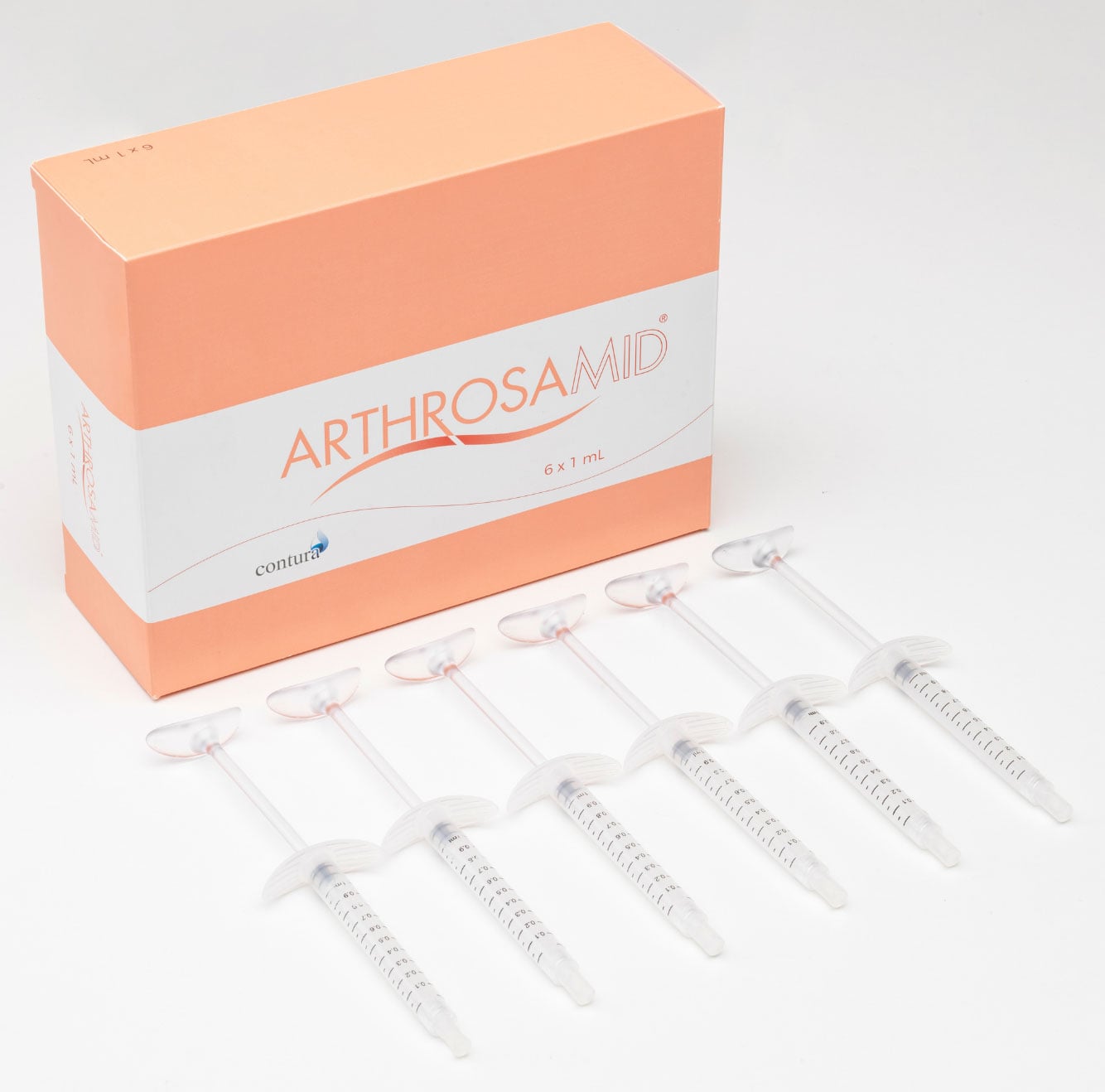
The recommended treatment is a single administration of 6mL (6 x 1mL syringes) into the affected knee. Repeated injections have not been evaluated in clinical studies.
At our clinic, the procedure will normally be performed using real-time ultrasound guidance to confirm accurate intra-articular needle placement.
The procedure involves cleaning and preparing the skin using strict aseptic/no-touch technique. Local anaesthetic is used, and any significant joint effusion may be aspirated before the Arthrosamid® is administered. The manufacturer’s current IFU recommends a 21G 2-inch Luer-lock needle and intra-articular administration.
Because Arthrosamid® is a permanent implant, infection prevention is particularly important.
You will therefore normally be prescribed prophylactic antibiotics before the procedure, according to the current Arthrosamid® manufacturer’s instructions and your individual medical circumstances.
Please tell us before treatment if you:
- Have any medication allergies, particularly antibiotic allergies
- Are taking anticoagulant or antiplatelet medication
- Have recently taken antibiotics
- Have an active or recent infection
- Have recently undergone dental treatment or surgery
- Are due to undergo an invasive procedure
Do not take antibiotics independently unless they have been specifically prescribed for your procedure.
The manufacturer also lists contraindications relating to a previous non-absorbable implant in the same knee, knee replacement/ foreign material within the knee, knee arthroscopy within the previous six months, and uncontrolled haemophilia or uncontrolled anticoagulation.
Treatment may also require additional consideration if you have:
- An infection elsewhere in your body
- An autoimmune disorder
- Immunosuppression or a compromised immune system
- Uncontrolled diabetes
- Planned major dental work
- A planned invasive medical procedure
The manufacturer states that safety and effectiveness have not been established for people under 18, during pregnancy/breastfeeding, in patients with BMI 35kg/m, or for a single dose exceeding 6mL.
Please discuss any of these circumstances with your clinician before proceeding.
Please tell us about all previous injections into the knee, including:
Corticosteroid injections, Hyaluronic acid injections (e.g. Ostenil/ Durolane), PRP or other injectables/implants.
Arthrosamid® should not be administered if a previous absorbable intra-articular injectable, such as hyaluronic acid, is not yet expected to have been absorbed according to that product’s manufacturer’s information. It should also not be administered into a knee that has previously received another non-absorbable injectable/ implant.
The aim of treatment is to:
- Reduce osteoarthritis-related knee pain
- Improve mobility
- Improve ability to undertake everyday activities
- Improve function and quality of life
Response varies between patients and improvement cannot be guaranteed.
Some patients notice improvement relatively quickly, but the manufacturer advises that maximum benefit can take up to approximately 12 weeks.
As with any injection, Arthrosamid® treatment carries risks.
The more commonly reported reactions include:
- Temporary pain following injection
- Swelling or a sensation of fullness in the knee
- Injection-site discomfort
- Temporary increase in symptoms
These reactions are generally mild to moderate and temporary. Baker’s cyst formation or swelling can also occur.
Less common but potentially important complications include:
- Bleeding or bruising
- Infection
- Persistent pain or swelling
- Failure to obtain meaningful symptom improvement
- Worsening osteoarthritis symptoms
- Neurovascular injury associated with the injection procedure
Although infection is rare, it is particularly important because Arthrosamid® is a permanent implant.
You may experience temporary discomfort, stiffness, fullness or swelling following treatment.
Follow the specific instructions provided by your treating clinician regarding activity and rehabilitation.
Continue your prescribed osteoarthritis rehabilitation programme unless advised otherwise. Arthrosamid® should normally form part of an overall knee OA management programme rather than replacing appropriate exercise and rehabilitation.
Contact us urgently if you develop:
- Increasing redness around the injection site
- Increasing warmth or swelling
- Severe or rapidly worsening knee pain
- Discharge from the injection site
- Fever, chills or feeling systemically unwell
These symptoms could indicate infection and require prompt medical assessment. The manufacturer states that infection following Arthrosamid® should be treated immediately with antibiotics and that corticosteroids should not be used to treat such an infection.
Arthrosamid® is a permanent implant.
You should tell healthcare professionals that you have received Arthrosamid® before future:
- Knee surgery
- Other surgery
- Major dental procedures
- Invasive medical procedures
The possible need for antibiotic prophylaxis should be discussed with the healthcare professional undertaking the future procedure.
Private Medical Insurance or Private Pay
ALC welcomes private pay patients, and accepts most private medical insurance policies for Arthrosamid® Injectable Hydrogel Treatment.
Please choose your private medical insurer from the table below to locate our Provider Code (note that is now a legal requirement for patients to obtain an Authorisation Code directly from their insurer before treatment can commence):
| INSURANCE COMPANY |
PROVIDER CODE |
| Alliance Health Corporation |
SP131736 |
| Aviva |
600069521 |
| AXA Health |
WA00865 |
| Healix Health Services Ltd |
Pending – Check Back |
| Vitality Health |
SP131736 |
| WPA |
920424020 |
Note: Your insurance company may require you to pay a policy excess directly to ALC (otherwise known as a deductible or co-pay). Your insurance company will advise the policy excess amount (if applicable).
Please click here to view our private pay fee schedule or here to book an appointment online.